Raja Ampat from Singapore: A Cost Guide for Flights, Liveaboards, and Permits
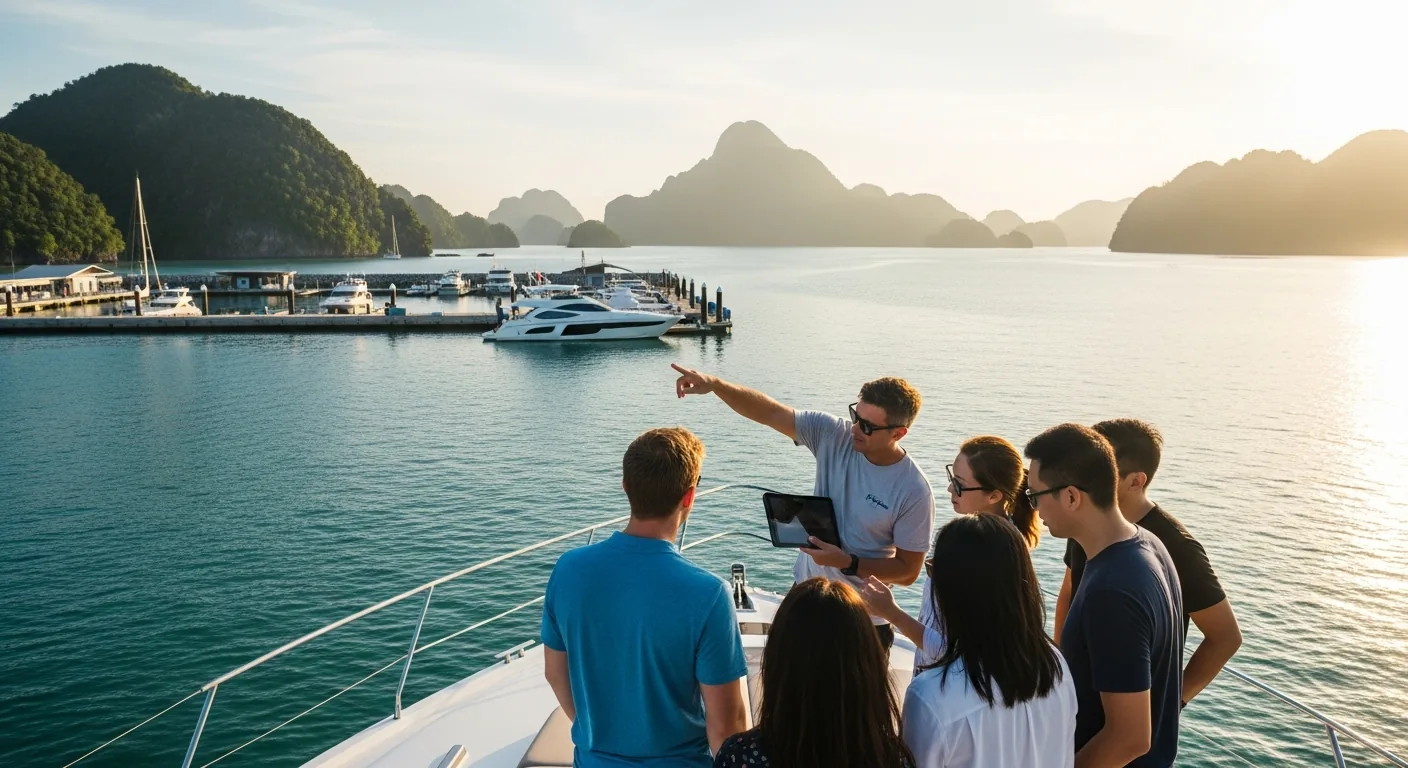
The sensation is of entering a liquid cosmos. Below, a sloping reef wall is saturated with color—gorgonian fans in deep crimson and orange, soft corals pulsing with the current. A school of yellow-fin fusiliers, thousands strong, parts around you like a silken curtain. This is the biological epicenter of the planet, the heart of the Coral Triangle. For the discerning Singaporean traveler, accessing Raja Ampat is not a question of if, but how. The archipelago’s remoteness is its primary defense, but it presents a logistical puzzle of flight connections, permit acquisitions, and financial planning. This guide deconstructs that puzzle, providing a clear, data-driven framework for planning an expedition from the Singapore gateway. See also: book Home.
The Financial Blueprint: Budgeting Your Raja Ampat Expedition in SGD and IDR
A successful expedition to Raja Ampat begins with a precise financial plan. The region operates almost exclusively on the Indonesian Rupiah (IDR), and while high-end operators quote in USD, understanding the full cost spectrum in your home currency (SGD) is critical. As of late 2023, the exchange rate hovers around 1 SGD to 11,500 IDR. A comprehensive budget for a 7-to-9-day trip, originating from Singapore, typically falls between USD 4,000 and USD 7,500 per person. This figure is an aggregate of several key expenditures, each requiring careful consideration. See also: see Raja Ampat from Singapore Travel Guide’s About.
The primary cost components are:
- International & Domestic Flights: Your transit from Singapore (SIN) to Sorong (SOQ), West Papua. This is a multi-leg journey, typically accounting for 20-25% of the total budget.
- Liveaboard or Resort Accommodation: The most significant expense, representing 60-70% of the cost. Prices vary dramatically based on the vessel’s or resort’s specifications and service level.
- Marine Park Permits & Local Fees: A mandatory conservation contribution, though a smaller fraction of the total budget.
- Ancillary Costs: Equipment rental, nitrox fills, crew gratuities (typically 10-15% of the charter cost), and personal spending.
A mid-range, 8-day liveaboard expedition, for example, might cost approximately USD 4,500. Broken down, this would be roughly USD 800 for flights, USD 3,200 for the liveaboard (at USD 400/night), USD 100 for permits and fees, and USD 400 for gratuities and extras. This translates to approximately SGD 6,100, providing a solid baseline for financial planning a singapore raja ampat tour.
The Singapore to Raja Ampat Flight Corridor: Navigating Jakarta and Sorong Gateways
The most efficient and reliable air route from Singapore to Raja Ampat’s entry point, Sorong (Domine Eduard Osok Airport, SOQ), is via Jakarta (Soekarno-Hatta International Airport, CGK). There are no direct flights, making a well-planned transit essential. The total travel time, including layovers, is typically between 10 and 15 hours. Planning the singapore to raja ampat flight requires attention to airline choice and layover logistics.
The primary route involves two distinct legs:
- Singapore (SIN) to Jakarta (CGK): This short-haul flight of approximately 1 hour and 55 minutes is serviced by multiple premium and budget carriers, including Singapore Airlines, Garuda Indonesia, and Batik Air. Most international flights arrive at Jakarta’s modern Terminal 3, which is crucial for a smooth transfer.
- Jakarta (CGK) to Sorong (SOQ): This is the main domestic leg, a red-eye flight that takes around 4 hours and 10 minutes. Garuda Indonesia and Batik Air are the principal operators. Booking this leg on a single ticket with your international flight (if possible) protects you in case of delays. A return ticket for this domestic portion generally costs between USD 250 and USD 400.
Dr. Mark Erdmann, a leading marine biologist with Conservation International who has spent decades in the region, notes that the journey itself acts as a natural filter, preserving the area’s pristine condition. Travelers should book flights at least three to six months in advance, especially for travel during the peak season from October to April, to secure favorable pricing and connections. See also: explore Contact.
Flight Path Comparison: Singapore (SIN) to Sorong (SOQ)
| Route | Airlines | Avg. Total Time | Avg. Cost (SGD) | Key Considerations |
|---|---|---|---|---|
| SIN ➔ CGK ➔ SOQ | Singapore Airlines + Garuda/Batik | 10-15 hours | SGD 800 – 1,400 | Most reliable route. Overnight layover in Jakarta may be required. Ensure transfers are within Terminal 3. |
| SIN ➔ UPG ➔ SOQ | Scoot + Lion Air/Garuda | 12-18 hours | SGD 700 – 1,200 | Transit via Makassar (UPG). Can be more cost-effective but may involve separate tickets and riskier connections. |
From Sorong to Waisai: The Final Leg to the Archipelago’s Heart
Upon arrival in Sorong, you are at the final staging point. The administrative capital of the Raja Ampat Regency is Waisai, located on the island of Waigeo. Reaching it, or your vessel directly, requires a sea transfer. There are two primary methods for this crossing. See also: book Flights Singapore Sorong.
- Public Express Ferry: The most common method for independent travelers. Ferries depart from Sorong’s Pelabuhan Rakyat ferry terminal. There are typically two sailings daily, one at 9:00 AM and another at 2:00 PM. The journey takes approximately two hours. Tickets for economy class are IDR 125,000, while VIP air-conditioned seating costs IDR 250,000. This is a reliable and cost-effective option if your schedule aligns.
- Private Speedboat Charter: Arranged in advance by your liveaboard operator or resort. This is the most seamless option. A representative will meet you at Sorong airport and escort you directly to a private speedboat. This bypasses Waisai and takes you directly to your final destination. The cost, often bundled into your package, can range from USD 500 to over USD 1,000 for the charter, depending on the boat’s size and the destination’s distance.
For most travelers on a structured Raja Ampat from SG itinerary, the private transfer is standard procedure, ensuring a swift and comfortable transition from air to sea.
Deconstructing Liveaboard and Resort Costs: USD 400 to USD 1,000 Per Night
Your choice of accommodation dictates both your experience and the majority of your budget. The two models—sea-based liveaboards and land-based resorts—offer different approaches to exploring the archipelago.
Liveaboards are floating dive hotels that navigate to remote and varied sites across the region. They are the preferred option for dedicated divers aiming to maximize their underwater time and site diversity. Costs per person, per night, generally include accommodation, 3-4 dives daily, all meals, and dive guide services.
- Luxury Tier (USD 700 – 1,000+ pp/night): Vessels like the Damai I or the phinisi-style Arenui offer boutique hotel-level service, spacious cabins, fine dining, and low diver-to-guide ratios.
- Mid-Range Tier (USD 400 – 650 pp/night): Operators such as the Mermaid II or Indo Siren provide excellent dive operations, comfortable amenities, and well-planned itineraries, representing the best value for serious divers.
- Exclusions: Be aware of costs not included in the sticker price: marine park fees, equipment rental (approx. USD 50/day), nitrox (approx. USD 10-20/day), alcoholic beverages, and crew gratuity.
Land-Based Resorts offer a fixed base from which to explore surrounding dive sites. They are suitable for travelers who prefer more space, non-diving activities, or a more relaxed pace.
The Raja Ampat Singapore flight is the first step to reaching these exclusive properties.
- Exclusive Resorts (USD 600 – 1,000+ pp/night): Properties like Misool Resort, located in its own 300,000-acre private marine reserve in the south, or Papua Paradise Eco Resort offer overwater bungalows and comprehensive dive packages with a strong conservation ethos.
- Homestays (USD 40 – 70 pp/night): For a more culturally immersive and budget-conscious experience, the Raja Ampat Homestay Network connects travelers with local family-run accommodations. Facilities are basic, but the experience is authentic.
Essential Permits and Fees: The Raja Ampat Marine Park Entry Tag (PIN)
Accessing Raja Ampat’s protected waters is contingent upon purchasing a Marine Park Entry Tag, locally known as a PIN (Personal Identification Number). Revenue from this permit directly funds the conservation and community development programs managed by the Raja Ampat Marine Park Authority (UPTD). This is a non-negotiable cost for all visitors entering the park boundaries.
- Cost for International Visitors: IDR 1,000,000 (approximately USD 70).
- Validity: The permit is valid for 12 months from the date of purchase, allowing for repeat visits within the year.
- Acquisition: The PIN can be purchased at the official UPTD office in Sorong or Waisai. However, for travelers on organized tours, the liveaboard or resort operator will almost always arrange this in advance on your behalf.
- Local Area Fees (Hak Adat): Be prepared for small, additional cash fees at specific high-value sites like the viewpoints at Wayag or Pianemo. These fees, typically around IDR 300,000 – 500,000, are collected directly by the local communities who hold traditional ownership rights over the land, providing a direct economic benefit.
A Specimen 4-Day Expedition Itinerary from Waisai
While most liveaboard trips are 7 to 11 nights, shorter, concentrated expeditions are possible, especially if based from a resort near the Dampier Strait. This sample 4-day itinerary highlights some of the most significant sites accessible from the Waisai area.
Day 1: Arrival & Dampier Strait Introduction
After the ferry or speedboat transfer from Sorong, settle into your accommodation. The expedition begins with a late afternoon check-out dive at Mioskon Island. The reef here is a superb introduction to the region’s biomass, with large schools of yellowtail snappers and patrolling blacktip reef sharks.
Day 2: Manta Sandy & Arborek Village
The day starts at Manta Sandy, a world-renowned cleaning station for oceanic and reef mantas (Manta alfredi). Divers rest on a sandy bottom at 15-18 meters to observe the animals as they hover over coral bommies to be cleaned by wrasses. In the afternoon, visit Arborek, a small village known for its community-based conservation. The dive under the Arborek Jetty is a celebrated macro site.
Day 3: The Passage & Pianemo Viewpoint
Explore “The Passage,” a unique dive site that resembles a river flowing between the islands of Waigeo and Gam. The tidal currents can be strong, carrying divers through a channel lined with arching trees and draped in sea fans. In the afternoon, make the journey to the Pianemo island group and climb the 320 steps to its famous viewpoint for a commanding perspective of the karst island landscape.
Day 4: Cape Kri & Departure
The final morning is dedicated to Cape Kri. This site holds a record for biodiversity; in 2012, marine biologist Dr. Gerald R. Allen identified 374 different species of fish on a single dive here. It is a fitting finale to the expedition. After the dive, begin the transfer back to Waisai and onward to Sorong for your flight home.
Navigating the logistics of a Raja Ampat from Singapore expedition requires precision and informed planning. By understanding the flight paths, budgeting accurately in both SGD and IDR, and selecting an operator that aligns with your objectives, this pinnacle of marine biodiversity becomes an attainable reality. Your first step is to establish a clear budget and timeline. The second is to engage with a specialist who can manage the complex in-country arrangements.
To begin planning your expedition, contact our specialists to discuss flight logistics, liveaboard availability, and permit requirements.
Raja Ampat from Singapore Travel Guide
Phone: +62 (811) 394-14563
Email: bd@juaraholding.com
Office: Jalan Sunset Road No. 88, Kuta, Badung, Bali 80361